Stiles, Latches and Muddy Boots: A Walkers’ Guide to Alford’s Field Crossings
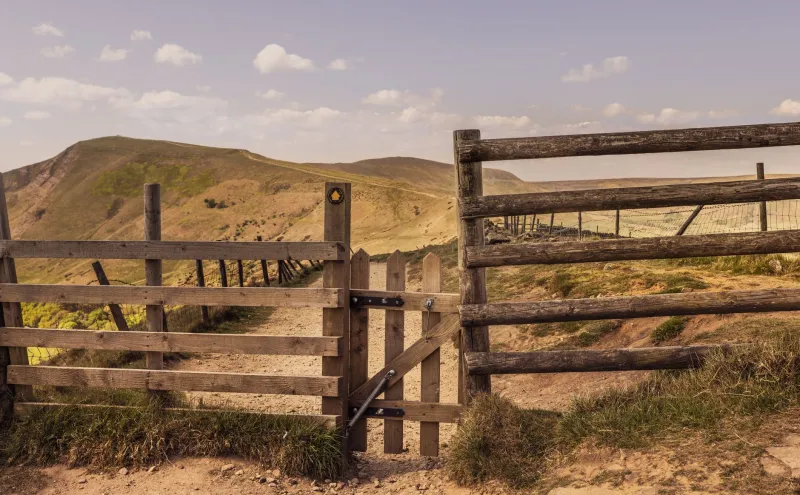
There is a particular sound that tells you you’re leaving Alford on foot. It is not a bell or a bus. It is the clack of a wooden stile, followed by the squelch of a boot finding the muddy side. For a village surrounded by fields and threaded with footpaths, the humble gate is not a detail. It is the punctuation mark at the end of a sentence.
As we head into the darker weeks of 2026, those crossings become more noticeable. The nettles have died back, the hedges are thinner, and the ground has turned from firm to persuasive. A good gate is a small piece of public infrastructure that asks nothing of you except a clean hand and a bit of care. A bad one — a swollen latch, a loose step, a footbridge slick with leaf mould — can turn a ten-minute shortcut into a small adventure.
Small Furniture, Big Connections
Alford’s footpath furniture is a mixed bag. You will find timber stiles worn smooth by generations of hands, metal kissing gates that swing with a satisfying clunk, simple footbridges over ditches and becks, and the occasional gap in a hedge that has become a right of way by nothing more official than everybody using it. Some are maintained by the council, some by landowners, and some by the quiet work of people who live nearby and notice when a hinge starts to sag.
The worn lines between these crossings are just as important as the crossings themselves. They show where people actually walk: the dog-leg around a wet patch, the slight curve towards a better view, the trodden edge beside a field margin. In a village like Alford, these lines are part of the map even when they are not printed on it.
The Kissing Gate, Explained (Without the Romance)
A kissing gate is not, sadly, a gate with romantic intentions. The name is usually thought to come from the way walkers pass through a small enclosure — close enough to exchange a word, a nod or, in older tellings, a kiss — while the gate itself swings shut to keep livestock where they belong. The design is clever: a gate within a frame, allowing one person through at a time without leaving an open gap for sheep or cattle.
That practical history is worth remembering when you meet one. The gate is there to be used, not climbed. Push it gently, let it swing, and check that it has closed behind you. If it sticks, lift the latch rather than forcing the swing. If it is tied open with baler twine, that is usually a sign that something needs reporting, not a new piece of village engineering.
A Winter Walk Checklist
Before you set off, a few small habits make a big difference.
- Check the latch before you lean. Wood swells in wet weather and metal can stiffen. A sticky latch is common in winter; a broken one is worth reporting.
- Look at the approach, not just the gate. Overgrown nettles, brambles or a fallen branch can make a safe crossing hard to reach. If you can clear a small obstruction safely, fine. If it needs tools, report it.
- Test footbridges carefully. Frost and leaf mould make boards slippery. Use the handrail if there is one, and step across rather than down.
- Keep dogs close near livestock. Even a friendly dog can be a problem in a field with sheep. Put the lead on before the gate, not after.
- Wear boots you trust. The mud between Alford and the Wolds is not malicious, but it is persistent.
- Carry a light. In November, a short afternoon walk can turn into a dusk walk without warning.
When Something’s Wrong: Reporting a Blocked Path
A blocked or broken crossing is more than an inconvenience. It can make a public right of way unusable for people with pushchairs, mobility aids or nervous dogs. If a gate will not open, a stile is broken, a footbridge is unsafe or a path is obstructed by a fallen tree or fence, note the exact location. A photo and a what3words reference help enormously.
Report the problem to Lincolnshire County Council’s public rights of way team, and copy in Alford Parish Council if it is a local route. FixMyStreet can also be useful for logging issues that fall under the council’s remit. Do not attempt a major repair yourself unless it is safe and you have permission; a well-meant bit of wire can make a gate harder to use and harder to fix properly.
The Unwritten Etiquette of the Crossing
Gates and stiles are shared spaces, and they work best when people treat them like borrowed tools. Close what you open. Do not climb over a gate that is designed to swing. Step aside for people coming the other way, especially if they are less steady on their feet. If you see litter caught in a hedge, take it with you. If you see a latch that is failing, report it rather than forcing it.
And if you meet someone at a kissing gate, say hello. The name may not be about romance, but it is about passing close enough to be neighbourly. In Alford, that is still a small and useful thing.
The stiles, latches and muddy boots are not the grand landmarks of the village. They are better than that. They are the everyday fittings that keep Alford connected to its fields, its footpaths and the people walking them. This winter, treat them kindly — and they will keep taking you somewhere worth going.