Salt on the Step: Ten Alford Corners That Keep Their Footing in Winter

The first proper frost of November 2026 has a way of redrawing a village. Kerbs that were simply kerbs in October become edges to respect. A short cut behind the church becomes a decision. And those squat yellow or green grit bins, easy to ignore for most of the year, suddenly look like public infrastructure doing a very local job.
This is not an official highways map. It is a neighbour's atlas: ten Alford corners where winter tends to concentrate, where a bin is usually within reach, and where someone nearby often notices when the salt is running low. Use it as a starting point, not a guarantee. Conditions change fast, and no bin replaces sensible footwear or a hand on a rail.
1. Market Place, by the east railings
The slope across the square is short but deceptively slick when the cobbles hold a thin film of ice. The grit bin near the railings is one of the most used in the village, largely because traders opening early tend to scatter a handful before the first customers arrive. If you are heading for the shops, take the railing side and shorten your stride. The railings are there for a reason in January; they are not decoration.
2. Church Street, below St Wilfrid's lychgate
The rise to the church catches shade for much of the day, so it can stay icy long after the main roads have cleared. There is a bin close to the lychgate and a handrail that is worth using even if you feel perfectly steady. Volunteers from the church and nearby houses often check the path before morning services. If the bin is low, report it rather than assuming someone else has.
3. Station Road, at the bridge approach
Bridge approaches are classic winter trouble spots: narrow pavements, a camber, and cold air that seems to settle. The bin here is positioned for pedestrians rather than cars, which is exactly right. Walk on the gritted strip where you can, and give yourself time at the bend. A little patience here saves a lot of bruising.
4. Willoughby Road, opposite the school gate
School-run corners have their own choreography. At drop-off and pick-up, the pavement opposite the gate takes a pounding, and a frosty morning can turn the verge into a mud slide. The bin is checked by parents who have adopted it without any formal ceremony. If you are pushing a pram, stick to the hard surface and avoid the grass edge. If you are a driver, leave the pavement clear.
5. Bilsby Road, at the South Street junction
This is a blind-ish corner for pedestrians and drivers alike, and the grit bin on the verge earns its keep. The crossing point is the bit to watch. Salt the route you actually walk, not just the road edge. And please do not pile cleared snow onto the pavement; it undoes the work of the person who just cleared it.
6. Aswell Street, the shaded narrow stretch
The narrow pavement here faces north and keeps its cold. It is a place for single file and a slower pace. A shopkeeper nearby often sweeps the frontage and drops grit on the step, which is the kind of small act that makes a street usable. If you see someone hesitating at the kerb, a steady arm is worth more than a lecture about boots.
7. Tothby Lane, where the footpath leaves the kerb
Out towards the edge of the village, the footpath can go from wet to glassy in an hour. There is a bin at the lay-by, and dog walkers are usually the first to notice when it needs refilling. Grit gives traction; it does not perform miracles. Wear something with a tread, and turn back if the lane looks worse than your shoes can handle.
8. Chapel Street, outside the community hall
Hall events bring people of all ages to one spot, often in the dark. The bin by the entrance is checked before toddler groups and evening meetings, and the step is usually salted early. If you are organising something, add 'check the step' to your list. It takes two minutes and saves someone a nasty fall.
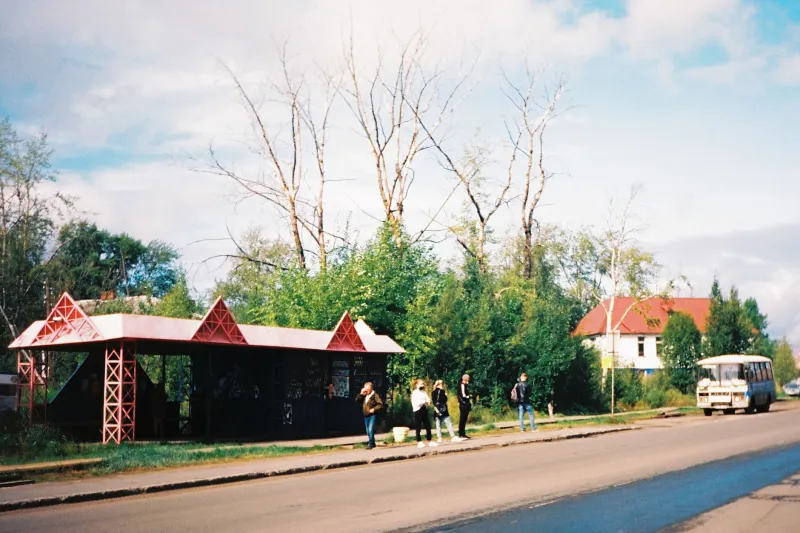
9. Rigsby Road, at the bus shelter
Bus stops are winter waiting rooms without walls. The shelter helps, but the bench and the kerb can still be icy. The bin here is a small one, so it empties quickly in a cold snap. If you are waiting, stand on the gritted patch and keep your hands free. If the bin is empty, a quick report to the county highways team is more useful than a grumble.
10. West Street, by the pharmacy and surgery
This is a corner where a fall can have consequences beyond a bruise. Older residents queue here, often on a slope, and the bin is well placed for the pavement outside the pharmacy. Staff keep an eye on it, but they cannot be outside all day. If you are able, scatter a little grit on your way past. It is not a job; it is a habit.
How to use the atlas without becoming a highways engineer
Grit is for traction. It does not melt ice on contact, and a heap of it is not better than a scatter. Use a handful where feet actually land: steps, kerbs, crossing points, the strip beside a handrail. Keep your gloves on, keep your back straight, and do not use hot water as a shortcut — it can refreeze and make things worse.
If a bin is empty or damaged, report it to Lincolnshire County Council's highways team or Alford Town Council rather than assuming it is someone else's job. If you clear a path, think about where the meltwater will go. Clear a drain cover if it is safe to do so. And check on the neighbour who is less steady than they were last year.
The part that does not fit in a bin
The bins are only half the system. The other half is people. The trader who salts the step before unlocking. The parent who kicks a path through the slush at the school gate. The dog walker who rings the council about an empty bin on Tothby Lane. The person who walks slower beside someone who is worried about falling.
If you are new to the village, this is an easy way in. Pick the corner nearest your door. Learn where the bin is. Say hello to the person who checks it. In a cold snap, that small patch of pavement becomes a shared project.
Winter 2026 will have its own surprises. The atlas will not cover every slippery step, and it is not meant to. It is a reminder that Alford looks after itself in ordinary ways: a scatter of grit, a steady arm, a report made before the bin is empty. Keep your footing, and keep an eye out.