The Hundred-Year Box: Alford Decides What to Bury for 2126
The idea arrived, as these things do, on a wet Tuesday when the pavements were doing their best impression of a river. Someone at the back of the village hall asked a simple question: if Alford wanted to send one box of itself into the next century, what would go in it? By the time the tea had gone cold, the question had stopped being simple.
A time capsule sounds like the easiest project in the world until you have to choose. A photograph is nice. A newspaper is better. But which photograph? Which newspaper? And do you really want to be the person who decides that the village's most important artefact is a flyer for a jumble sale?
The conversation has since spread from the hall to the shop counter, the school gate and the bus stop. Everyone has a suggestion. Nobody agrees. That, in itself, feels like the right place to start.
The Box Under the Stairs
Alford has tried this before, in its own quiet way. There was a box put into the wall of the village hall at the turn of the millennium, and an earlier effort connected to a school anniversary that seems to have been sealed with great ceremony and then quietly forgotten. This is not unusual. Most village time capsules are less 'message to the future' and more 'thing we did on a Saturday and then covered with plaster'.
The lesson from those earlier attempts is not that the idea is silly. It is that a capsule is only as useful as the story attached to it. A tin of coins and a list of names tells the future almost nothing. A recording of a child explaining what they eat for tea tells it rather a lot.
That is why the current proposal has a rule attached: nothing goes in unless someone can explain, in one sentence, why it matters. The rule has already caused arguments. It has also improved the suggestions considerably.
What Earns a Place
The obvious candidates are the ones that keep coming back. A copy of the parish newsletter, not because it is glamorous but because it is dense with ordinary life: the coffee mornings, the lost cat, the road closure, the thank-you to whoever cleared the drain. A local bus timetable, which may baffle the 2126 reader entirely and will therefore be fascinating. A copy of this website, stored offline, assuming someone can still open the file.
Then there are the suggestions that make the box feel like Alford rather than any village. One resident wants a recipe for the soup that appears at every winter gathering, with the note that the recipe is deliberately vague because nobody measures anything. A Year 6 pupil has proposed a small bag of soil from the recreation ground, which is either deeply poetic or a sign that we have all been indoors too long. Both are probably true.
Someone else has suggested a single good-quality photograph of the high street on a normal day — not a festival, not a snowfall, just a Tuesday with cars parked badly and someone coming out of the bakery. That is the sort of image that future residents might actually recognise.
The Sound of the Village
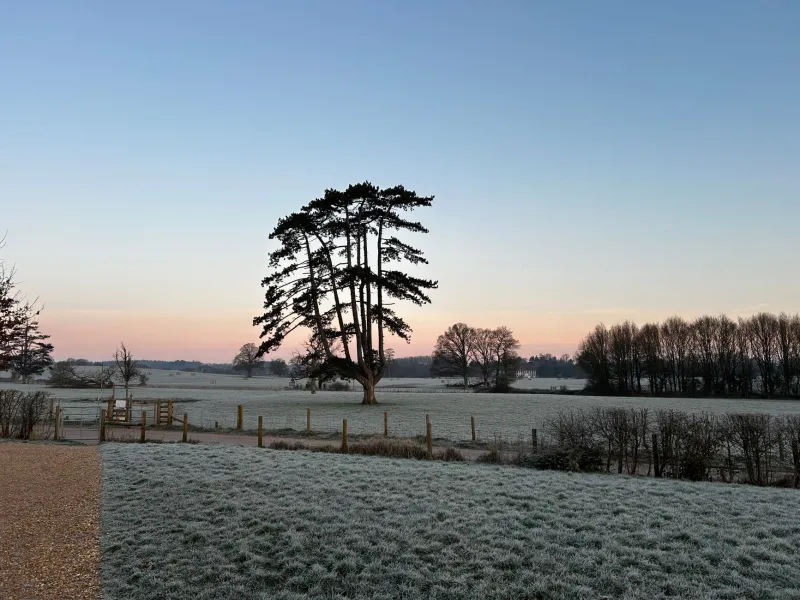
The strongest idea so far is not an object at all. It is a recording: the church bells, the school playground at break, the click of the shop door, the rumble of the bus, the particular silence of a frosty morning before anyone has started their engine. Sound ages well. It carries accents and rhythms and the noise of a place that photographs flatten.
A small group has offered to make the recording properly, with a decent microphone and a list of times rather than a phone waved vaguely out of a window. They have also suggested including a short conversation between two residents who have lived here all their lives, talking about what has changed and what has not. That feels more valuable than any list of dates.
There is talk of including a letter — not a formal document, but a plain one, written by a handful of people, explaining what Alford was worried about in 2026 and what it was hopeful about. No predictions. Predictions age badly. Just the ordinary weather of a village at a particular moment.
The Arguments
The disagreements are the best part. One camp wants the box to be practical: maps, a census, the names of every group and club, a guide to the village as it actually works. Another camp wants it to be human: voices, handwriting, a child's drawing of a house that looks nothing like a house.
The practical camp has a point. A capsule that cannot be understood is just a curiosity. The human camp has a better point. A capsule that can be understood but not felt is just a filing cabinet.
Then there is the question of where the box should go. Under the floor of the hall? In the church wall? Beneath a new tree on the green? Each option has a keeper and each keeper has a strong opinion about damp. The current favourite is somewhere visible but not obvious, with a plaque that says what the box is and when it should be opened. A capsule nobody can find is not a message. It is a rumour.
A Letter to 2126
What would Alford of 2026 actually want Alford of 2126 to know? Probably that the village was not a postcard. It was a place where people argued about parking and bins and whether the lights should go up earlier. It was also a place where someone would always bring a casserole, where the noticeboard still mattered, and where the same handful of names did most of the carrying.
Perhaps the best thing to bury is not a thing at all but a question. Not 'what were we like?' but 'what did you keep?' If the answer in 2126 is that the bells still ring, the bus still runs and somebody still makes the soup, then the box will have done its job.
The next meeting is in the new year. Bring one suggestion and one objection. That seems to be how Alford works best.