The Cypher Trail: A Letter-Writer’s Walk Around Alford’s Postboxes
There is a particular kind of Alford walk that begins with no great purpose. You set off for a pint of milk, notice the paint on a postbox is looking tired, and suddenly you are halfway through a history lesson without a notebook. November is good for this. The leaves are down, the light is low, and the village feels as though it is quietly getting on with things.
This is a short trail around some of Alford’s postboxes – not every single one, and not in any official order. Think of it as a letter-writer’s wander. You can do it in under an hour, or stretch it out with a coffee and a look in the window of a charity shop. The point is not to collect them like train numbers. The point is to notice what they tell us about how the village has stayed connected.
Start where the village talks to itself
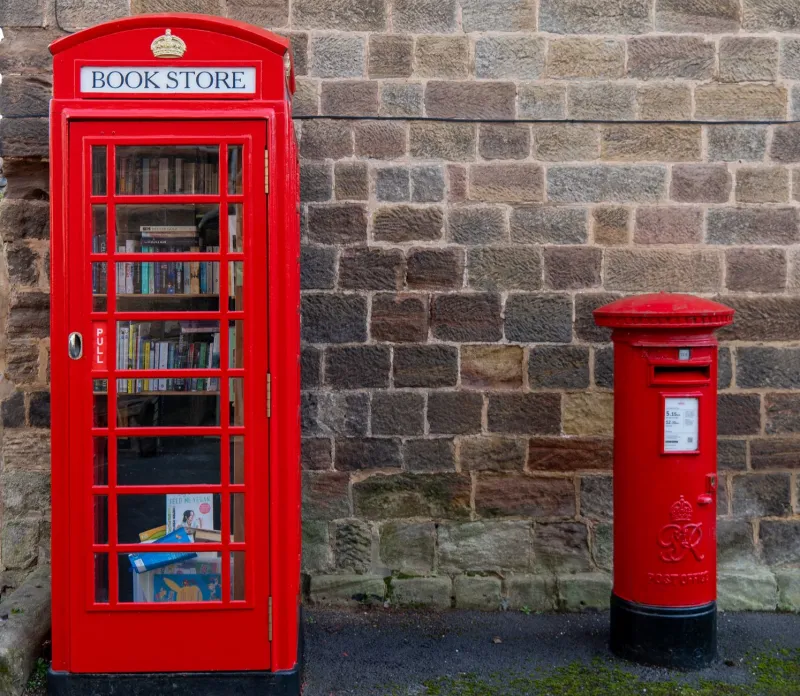
Begin in the Market Place. The box here is the sort that has seen everything: bus queues, Saturday shoppers, posters for lost cats, and the annual flutter of Christmas cards. If you look closely at the door, you will usually find a royal cypher – the monarch’s initials that date the box to a reign. A VR means Victoria. GR means George. ER means Elizabeth. Newer boxes carry CIIIR for Charles III. It is a small piece of metalwork, but it is also a timeline.
Alford’s boxes are not museum pieces. They are working equipment. The paint is thick because it has been renewed many times, and the black base is often scuffed by dogs, boots and the occasional bicycle. The collection plate inside the aperture tells you when the next pick-up is due. That plate is worth reading properly, because last-collection times vary from box to box. A box on a busy road may be cleared later than one on a quiet lane. If you are posting something important, use the plate, not your memory.
The quiet gospel of the wall box
Head away from the centre and you will find smaller boxes set into walls or standing on short pillars. These are the ones people walk past without seeing. A wall box might be faded to a dull brick red, with a slot that seems almost too narrow for a Christmas card. Yet it does the same job as the grand pillar box: it takes the letter, and it sends it onward.
This is where the village’s practical geography comes in. Alford is not a place where everything is five minutes away. For some residents, the nearest box is a short walk; for others, it is part of a longer loop with the dog or the shopping trolley. The postbox is a small civic promise: put your letter here, and someone will come. In an age of instant messages, that promise is oddly comforting.
Cyphers, paint and small acts of care
The history of the British postbox is a story of standardisation and local variation. The first roadside letter boxes appeared in the 1850s, and the familiar red colour became the norm later in the nineteenth century. Before that, boxes came in various designs and colours. Alford’s surviving boxes span different eras, and not all of them are listed or famous. That is part of their charm. They are ordinary, useful, and quietly old.
Look for the little details: the royal cypher, the words ‘Post Office’ in raised lettering, the maker’s name sometimes cast into the metal. Some boxes have been repainted so often that the lettering has softened. Others have a small notice taped inside the door – a temporary collection change, a reminder about parcel size, or a handwritten apology for a missing collection. These scraps of paper are the village’s own newsfeed.
The November practicalities
Now the useful bit. If you are sending Christmas cards this year, do not leave it until the last week. Royal Mail publishes its last posting dates for Christmas 2026 on its website and usually displays them in post offices. The dates differ for first class, second class, parcels and international mail, so check the current list rather than relying on last year’s. As a rule of thumb, post earlier than you think you need to, especially for anything going abroad.
For local cards, the village post office and the box collection plates are your friends. Note that last-collection times are not the same as the time on the plate at the main office. A box cleared at 4pm is not a box cleared at 5.30pm. If a card matters, hand it over the counter or post it a day early. And if you are posting a parcel, check the size and weight rules before you seal it – the slot is less forgiving than it looks.
A small ritual worth keeping
There is a temptation to treat all this as nostalgia. But postboxes are not relics. They are part of how Alford works: birthday cards, thank-you notes, hospital letters, business invoices, Christmas wishes. The red pillar is a fixed point in a village that otherwise changes by small degrees. You post a letter, and for a moment you are connected to someone else’s day.
So take the walk. Start at the Market Place, follow the cyphers, read the collection plates, and end with a card in your hand. It is a small thing, but Alford is built on small things. And in November, with the dark arriving early, a letter through the door still feels like a bit of light.