When Alford Falls Silent: A Resident's Guide to Remembrance Sunday 2026
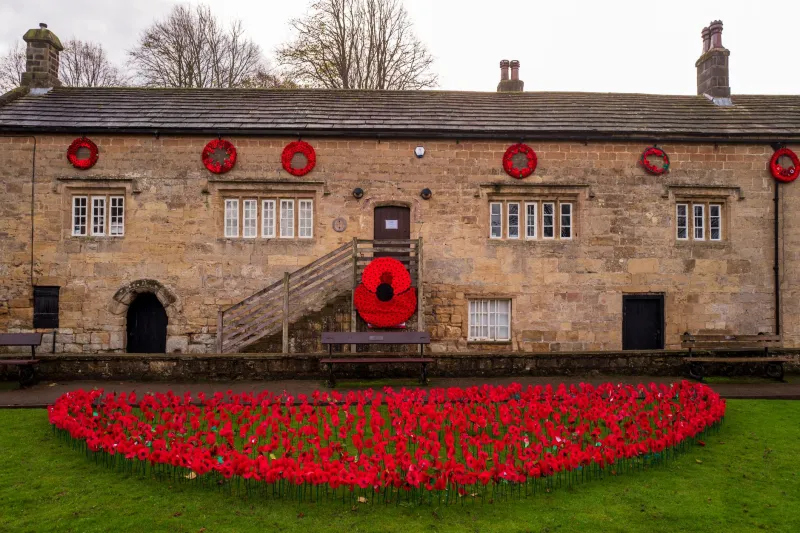
Remembrance Sunday in Alford is not a performance. It is a timetable, a gathering, and a silence that belongs to everyone who turns up. Today, 8 November 2026, the village will do what it has done for generations: assemble, remember, and disperse. If you have never been, or you are visiting for the weekend, this is how the morning usually unfolds — and how to take part without feeling like you are intruding.
Before you set off
Check the parish noticeboard and the church notices before you leave. Times can shift slightly from year to year, and the order of service is the authoritative version. Wear something warm and waterproof; November in the Wolds does not do gentle. Poppies are usually available in the days before and on the morning itself, with donations going to the Royal British Legion. If you need a seat or have mobility concerns, ask at the church or speak to a steward early — nobody will mind, and it is easier to arrange before the crowd gathers.
Parking near the centre is limited. If you can walk, walk. If you cannot, allow extra time and avoid blocking the routes used by the parade.
The gathering
The morning begins quietly. From around 10.15am, people start to gather at the usual assembly point in the village centre. Standard-bearers arrive with their flags. Uniformed groups check their lines. Councillors, churchwardens and ordinary residents in good coats stand about in the way that villages do, half chatting and half listening for the signal to move.
You do not need to join the parade to take part. Standing at the side is perfectly normal. The parade is not a private club; it is simply the village walking from one place to another so that everyone arrives together.
The procession and the memorial
At roughly 10.35am, the procession forms up and moves towards the village war memorial. The pace is slow but not solemn to the point of theatre. If you are following, keep behind the uniformed groups and leave room for wreath-layers to reach the memorial.
The memorial itself is the village's ledger. The names carved there are not abstract. They belong to families who worked on farms, in workshops and in shops within a few miles of where you are standing. Some surnames will be familiar from the school gate, the shop queue or the cricket field. That is the point of a village memorial: it is local history with a postcode.
The silence and the Last Post
At 11am, the village falls silent. The Last Post is played, and for two minutes Alford stops. This is not an awkward silence. It is a shared one. Resist the urge to fill it with a phone, a comment or a photograph. Stand still if you can. If you are with children, a quiet word beforehand about what the silence is for will do more good than a lecture in the moment.
The silence ends with the Reveille. Hats go back on, shoulders loosen, and the ceremony continues.
The wreaths: names behind the cards
After the silence, wreaths are laid. This is the part that rewards attention. Each wreath carries a card, and each card carries a story. Some are from the parish council, the Royal British Legion, the scouts, the primary school or local businesses. Others are from families, and those are often the ones that catch your eye: a surname you recognise, a short dedication, a photograph tucked into a ribbon.
The stories behind the wreaths are rarely dramatic in the telling. They are ordinary: a great-grandfather who did not come home, a uncle remembered by a niece, a family who still lives two streets away. That ordinariness is what makes the ceremony local. If you want to understand the village's cost, do not just watch the wreaths being laid. Read the cards afterwards, when the crowd has moved on and the cards are still there.
Do not photograph people laying wreaths without asking. A ceremony is not a backdrop.
After the service
A service usually follows at the church, with hymns, readings and a short address. You do not have to be a regular churchgoer to attend. After that, there is often tea, coffee and a chance to talk. This is the part where the morning becomes a village again rather than a ceremony. Stay if you can. It is where the names on the memorial meet the names in the room.
If you are new to it
Stand where you can see the memorial but do not block the wreath-layers. Remove hats during the silence. Do not clap, film or take calls. Follow the stewards if you are unsure. If you are visiting from outside the village, you are welcome; just let the local rhythm lead.
A rough minute-by-minute sketch
| Time | What usually happens |
|---|---|
| 10.15am | People begin to gather in the village centre |
| 10.35am | Parade forms up and moves towards the memorial |
| 10.50am | Wreath-layers and officials take their places |
| 10.58am | Short introduction and reading |
| 11.00am | Two-minute silence begins |
| 11.02am | Last Post and Reveille |
| 11.05am | Wreaths are laid |
| 11.20am | Blessing and closing words |
| 11.30am | Move to church service or disperse |
Times are a guide, not a guarantee. The order of service and the steward's nod are what actually keep the morning moving.
The point of turning up
Remembrance Sunday works because people turn up without needing to be asked twice. You do not need a uniform, a medal or a family name on the memorial. You need to stand still for two minutes and mean it. In a village like Alford, that is a form of neighbourliness as much as remembrance. The Last Post sounds better when the square is full.