Coppers, Care and the Counter: Where Alford's Spare Change Actually Lands
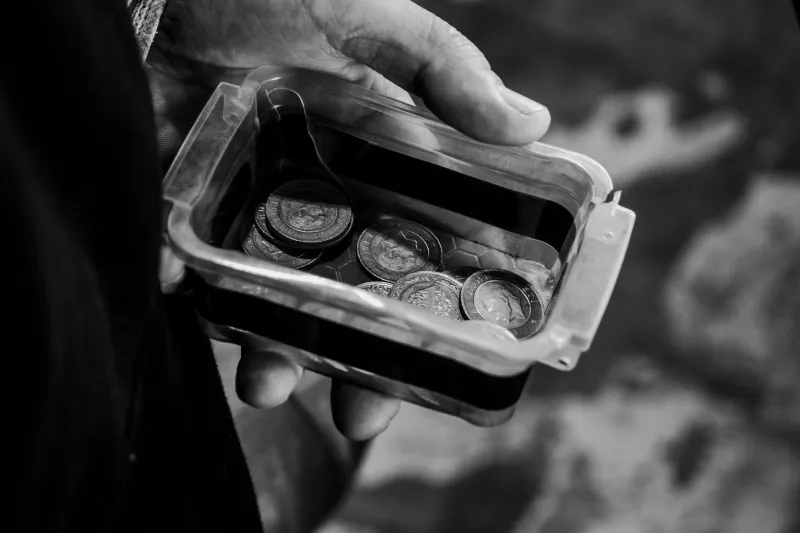
There is a particular sound a village makes in November. Not the wind off the Wolds, though there's plenty of that. It's the soft, tinny chink of a fifty-pence piece dropped into a collection box by someone who hasn't quite decided what they're buying yet.
You'll hear it in the Co-op, in the greengrocer's, along the bar of a pub on a Friday, on the windowsill of the village hall while a toddler's birthday party rages behind you. It is, by any measure, small change. It is also, by any measure, the quiet engine of a great deal of Alford life.
So we spent a fortnight asking a simple question: where does it all go?
The tin by the till
Stand at most Alford counters for five minutes and you'll watch the ritual play out. A customer pays £8.40, gets 60p back, and the coppers go straight into whichever box is nearest. Nobody makes a speech about it. Nobody asks for a receipt.
"It's just what people do," says Margaret Ellison, who has worked behind the till at a town-centre shop for eleven years. "I've had the same air ambulance tin on my counter since before I started. It fills up, someone from the charity comes and empties it, and back it goes. I've never once had to chase it."
That tin, she reckons, takes maybe £15 to £25 a week. Multiply that across a town with a dozen or so visible boxes and you begin to see the shape of it: not a fortune, but a steady, reliable trickle that a great many local causes have come to depend on.
Following the fifty-pence pieces
The honest answer to "where does the money go?" is: mostly to unglamorous things.
There's the air ambulance tin — the one almost every shop seems to have, and the one that fills fastest. There's the box for the church fabric fund, which pays for things like lead flashing and gutter clearing that nobody photographs but everybody notices when they fail. There's the village hall roof fund, which has been quietly accruing in a jar near the tea urn since roughly the last time the roof needed doing, and will be accruing again long after this one is finished.
Then there are the smaller, stranger causes that tell you most about a place. The hedgehog rescue that operates out of a garden shed three villages over. The scout hut that needs new camping pans because the old ones have been to the bottom of a hill one time too many. The defibrillator that sits in a converted phone box and needs its pads replacing every so often, a fact almost nobody thinks about until the day they desperately do.
And the food bank collection point that isn't a tin at all but a shopping trolley by the door, which fills and empties with a rhythm that says rather a lot about the last few years.
What a few hundred pounds actually buys
Here is the part that surprises people. A collection tin that looks permanently half-empty might still yield £400 a year. That's a set of replacement pads for a defibrillator and a bit over. It's a term's worth of craft supplies for a toddler group, or a new kettle and a proper urn for the hall, or the fuel for a volunteer driver doing hospital runs.
"People think small money is pointless money," says Alan Prescott, who has emptied tins on behalf of a local charity for the best part of a decade. "It isn't. It's the opposite. Big grants come with forms and conditions and a deadline. Tins just turn up. They're the only income a small group has that nobody has to apply for."
He's careful to be honest about the practicalities, too. Tins have to be sealed, counted, banked, and the counting is nobody's favourite job. A fair amount of it happens on kitchen tables on a Sunday evening, with a mug of tea and a coin sorter that's seen better days.
The shopkeeper's calculation
Not every counter has a box, and the reasons are usually practical rather than stingy. Space is tight. Some shops have been asked once too often. There's a real worry, among a few traders, that a cluster of tins can look like a demand rather than an offer.
"I limit it to two," one shopkeeper told me, asking not to be named because she didn't want to seem ungenerous. "Two, and I rotate them every few months so nobody feels left out. If I had eight on the counter people would stop seeing any of them."
It's a fair point, and it's worth bearing in mind if you're ever the one shaking a box in a shop doorway. Choice helps. A tin nobody notices raises nothing.
Why this winter feels different
There's no crisis in the collection tin. But there is a slow squeeze. Fewer people carry cash, which everyone in this article mentioned without being asked. Card payments don't produce shrapnel, and shrapnel is the whole business model.
Some groups have adapted — one now has a QR code taped to the side of its box, which apparently works surprisingly well with the under-forties and baffles everybody else. Others are simply counting more carefully and budgeting with more caution, because they know the trickle is getting thinner.
The run-up to Christmas is still the busiest stretch of the year for most of them. Not because people give more generously in December — though some do — but because more people come through the door. More customers, more coffees, more change, more chinks.
A quiet sort of generosity
What comes through most clearly, talking to the people who mind these tins, is that nobody involved thinks of it as charity in any grand sense. It's more like maintenance. Somebody has to keep the roof up and the pads fresh and the pans in the scout hut, and the least fussy way of doing it is a box by the till and a village that doesn't think twice.
So next time you're handed 30p and there's a tin within reach, you know the sort of thing it's headed for. Probably a gutter. Possibly a hedgehog. Definitely something that would otherwise go unfunded.
And if you'd rather know precisely where your money lands before you part with it, ask the person behind the counter. In Alford, they'll almost certainly be able to tell you — and they'll probably be glad you asked.