The Unseen Rota: How Alford's Village Halls Keep Their Doors Open in Winter 2026
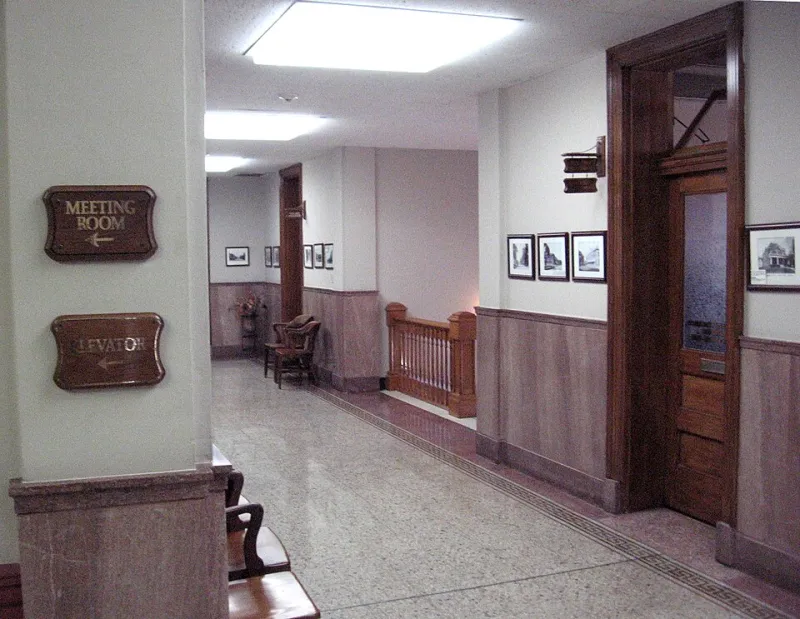
Photo: MrHarman, CC BY 3.0, via Wikimedia Commons
The cold Tuesday test
It is 7.40am on a Tuesday in January, and the Memorial Hall on Chapel Street is already awake. A van door slams. A key turns in a lock that has needed a jiggle since 2019. Inside, the air is cold enough to see your breath, and the first job is not tea. It is the boiler.
Derek Foss, 68, has been wrestling with the hall's heating for eleven years. The boiler is a floor-standing lump from the late 1980s that he has nicknamed Beryl. 'She has opinions,' he says, crouching to peer at a pressure gauge. 'If you ask her for heat before eight, she sulks. So we ask at ten past.'
This is the reality behind the village hall diary. Not the glossy poster advertising the Christmas fair, but the quiet, unpaid choreography that gets the doors open, the radiators warm and the chairs back in their stack before the next booking arrives. Across Alford, three halls – the Memorial Hall, the Church Room and the Old School Room – run on a mixture of rotas, borrowed equipment and the kind of unspoken rules that only make sense after you have broken one.
The diary, the group chat and the good tablecloths
Margaret Ellison, 74, has been the bookings secretary for the Memorial Hall since 2014. Her system is a hardback A4 diary, a pencil and a WhatsApp group called 'Hall Keys'. 'People think it's all online now,' she says. 'It isn't. The diary is the truth. The group chat is for emergencies, like when the urn fuse goes or someone has left the stage lights on.'
The hall's booking rates are straightforward: £12 an hour for Alford residents, £18 for commercial lets. There is a winter heating surcharge of £4 per booking between November and March, which goes straight into the boiler fund. The kitchen is included, but the good tablecloths are not. They live in a cupboard marked 'Best – ask Margaret' and are produced only for weddings, funerals and the annual parish council dinner.
The unspoken rules are posted nowhere and known by everyone. Stack the chairs in threes, not fours – the stack gets too high and the fire officer has views. Return the long tables to the wall with the legs facing out. Do not put the hot urn on the varnished table; there is a mat for that, and the mat is on the hook by the door. And if you use the last of the milk, write it on the whiteboard, not on the back of your hand.
Beryl, the boiler, and the winter surcharge
The heating is the great shared anxiety. The Church Room has a modern condensing boiler that behaves itself. The Old School Room has storage heaters that are either 'off' or 'tropical', with no middle setting. The Memorial Hall has Beryl.
'We had a new boiler quoted at £8,000,' says Derek. 'We didn't have £8,000. So we have Beryl, and a service contract, and a spare part on the shelf in the cupboard under the stairs.' The hall committee runs a 'warm winter' fund, topped up by the soup lunches and the quiz nights, which pays for the extra oil when the temperature drops below zero.
For residents, the practical upshot is simple: if you book a hall in winter, ask what time the heating goes on. At the Memorial Hall it is 7.30am for morning bookings, and it takes Beryl a good hour to get the chill off. If your group meets at 9am, the first twenty minutes will be spent in coats. Nobody minds. It is part of the ritual.
The Saturday crew
Not all the volunteers are retired. The Saturday crew at the Old School Room is a rotating band of six parents who take turns to open up for the children's drama group. They have their own rota, pinned to the noticeboard, and their own rules: one person unlocks, one person makes the squash, and one person stays behind to sweep the glitter.
'We started because the hall was going to close on Saturdays,' says Priya Nair, 41. 'Now it's the easiest hour of my week. The children run about, the kettle goes on, and someone always brings biscuits.' The crew also runs a monthly repair café in the same room, which has kept the hall's own toaster, vacuum and folding tables alive for another year.
What the chair stack actually means
Back at the Memorial Hall, the chairs are stacked in threes against the back wall. They are grey plastic, slightly scratched, and they have been re-stacked perhaps ten thousand times. The stack is the last thing you see before you leave and the first thing you move when you arrive. It is also, in its way, the whole point.
'People think a village hall is a building,' says Margaret. 'It's not. It's a rota. It's someone remembering to put the heating on. It's Derek with his spanner and Priya with her biscuits and the person who writes 'milk' on the whiteboard.' She closes the diary. 'And it's the chair stack. If the chairs are tidy, the hall is still going.'
For anyone who wants to book, the numbers are on the noticeboard by the door: Memorial Hall bookings on 01507 000000, Church Room through the parish office, Old School Room through the Saturday crew's email. Winter rates apply until March. Bring a coat for the first twenty minutes. And whatever you do, don't put the urn on the good table.