The Quiet Places We Share: Counting Alford’s Seven Public Benches
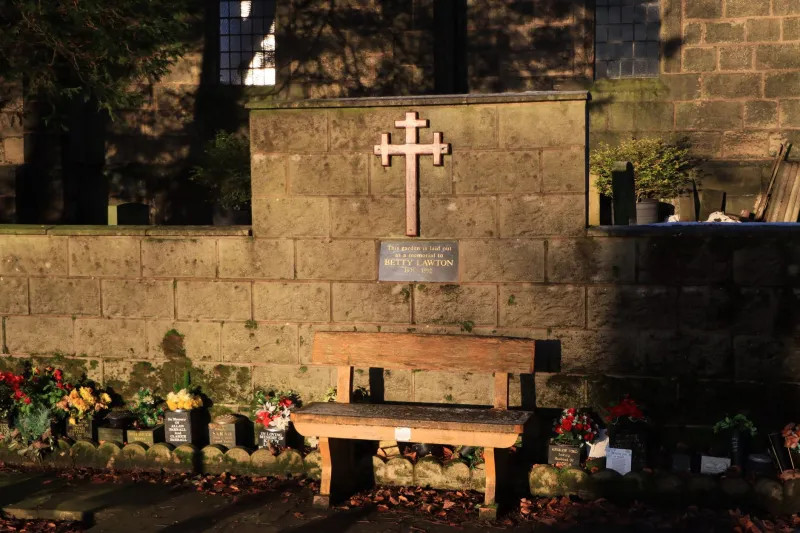
On a damp Tuesday morning, with a folded map in one pocket and a thermos in the other, I set out to count Alford’s public benches. It was not an official survey. Nobody asked me to do it. But once you start noticing benches, you cannot stop. They are the village’s unpaid hosts: always open, never hurried, and usually holding a story or two in their slats.
Why count benches at all?
Street furniture is easy to ignore. We notice a missing bin or a broken light, but a bench just sits there, quietly doing its job. Yet a bench is a small piece of civic trust. Someone paid for it, someone maintains it, and someone decided that a particular view was worth sharing. In a village like Alford, benches are also a kind of autobiography. Their plaques carry names, dates and the odd phrase that tells you more about local life than a history book might.
The census found seven publicly accessible seats in and around the village centre. Seven is a good number for a walk: enough to make a route, few enough to remember. It is not a definitive list. If you know of an eighth, I would genuinely like to hear about it.
The route, roughly
Start at the Market Place and face the square. Then take the churchyard path, cut through to the Manor House garden, follow the lane towards the windmill, loop past the recreation ground, pause at the bus stop on the main road, and finish on the footpath that points towards the Wolds. A hand-drawn version of this route is pinned to the Alford Voice noticeboard, complete with a small sketch of each bench and a warning about the churchyard yew tree.
It takes about an hour and a half if you march. It takes three if you do it properly.
Seven seats, seven stories
1. The Market Place bench
The plaque is worn smooth, but you can just make out the Brown family name and a date from the 1970s. It was donated in memory of a market trader, and it still faces the square as if keeping an eye on the stalls. Margaret H. told me she uses it as a meeting point. “It’s the closest thing Alford has to a departure lounge,” she said. “You sit, you wait, you see everyone you know.”
Best for: people-watching, waiting for a friend, pretending you are not waiting for a friend.
2. The churchyard bench
Tucked under the yew at St Wilfrid’s, this one is sheltered from the worst of the wind. It was given by the Mothers’ Union, according to the plaque, and it has the quiet, useful feel of a seat that knows why it is there. A retired teacher told me she sits there after funerals, not because she is morbid, but because it is a place to gather yourself before going home.
Best for: a quiet five minutes, a difficult day, a dry spell in the rain.
3. The Manor House garden bench
This is the reader’s bench. A local book group donated it, and the plaque says, simply, “For the next chapter.” It overlooks the herb garden and catches the afternoon sun in a way that makes you want to stay longer than you intended. On the day I visited, someone had left a paperback behind. I did not take it. That felt like cheating.
Best for: a packed lunch, a notebook, a slow afternoon.
4. The windmill approach bench
The cycling club paid for this one, and you can tell. It faces the sails, which is glorious on a still evening and mildly perilous on a gusty one. There is a small chew mark on the armrest that suggests a dog has also claimed it. The view is the point: windmill, sky, a few rooftops, and the kind of light that makes Alford look like it has been painted on purpose.
Best for: photographs, catching your breath, checking the weather by looking at the sails.
5. The recreation ground bench
This is the family bench. It was donated by grandparents, and it sits close enough to the swings to be useful and far enough away to be sane. It has seen birthday parties, teenage sulks, first shifts as a parent, and at least one minor argument about whose turn it was to fetch the water bottles. It is not peaceful, but it is honest.
Best for: supervising children, peeling oranges, recovering from a game of football.
6. The bus stop bench
The parish council installed this one after a survey, which is possibly the least romantic origin story in the village. But it is the only bench with a timetable, and that makes it vital. It is where you sit when your knees hurt, when the bus is late, or when you have bought too much shopping and need to reconsider your choices.
Best for: waiting, resting, quietly judging the traffic.
7. The Wolds footpath bench
At the edge of the village, where the path begins to climb, there is a bench donated by a walking group. The inscription reads: “Rest a while, then go further.” It looks back towards Alford, which is the right direction for a bench at the start of a walk. From here, the village looks compact and tidy, as if it could fit in your pocket.
Best for: sunsets, starting points, the moment before you decide to keep going.
What the benches tell us
Plaques are a village’s autobiography, written in short bursts. They tell you who was loved, who was missed, and which groups thought a seat was a good way to say thank you. Old photographs do the same job differently. If you have a picture of a bench from years gone by — a family sitting outside a shop, a couple on the churchyard path, a child climbing where they should not — Alford Voice would love to see it.
The benches also tell us something about how the village looks after itself. Some are pristine. Some are weathered. One has a loose slat that has been screwed back into place with obvious care. None of them are grand. All of them are useful.
Nominate a bench for a plaque
There are benches in Alford with no plaque at all, and that feels like an oversight. If you know a seat that deserves a proper mention — because of who donated it, what happened nearby, or simply because it has the best view in the village — send us the details. Tell us where it is, why it matters, and whether there are any names or dates we should know about. A photograph helps. A short memory helps more.
This is not a formal council consultation. It is a conversation with somewhere to sit. The best nominations will be published on Alford Voice, and we will pass a shortlist to the parish council for a gentle nudge.
A last sit-down
By the time I finished the route, the thermos was empty and the light was going. Seven benches, seven stories, and not one of them was empty for long. A bench is not just a place to rest. It is a place to be part of the village without having to say anything at all. If you see someone sitting on one this week, nod. They are doing the same thing you are.