Stones That Remember: A Slow Walk Through Alford’s Shopfront Past
The high street is a poor archive. It forgets quickly. A shop closes, the sign comes down, the window is replaced, and within a decade the building looks as if it has always been something else. But look up, look down, and look at the edges. The stones are slower than we are. In Alford, the past is still written in granite, in faded paint and in the worn step of a doorway that has taken more feet than the current business will ever see.
This is not a formal heritage trail. There are no brass plaques and no app. It is a slow walk of about forty-five minutes, best done on a dry morning when the light is low enough to catch old lettering. It is pushchair-friendly and mostly level, though there are a few uneven kerbs and one narrow lane. Please remember that these are working buildings and private homes. Admire from the pavement, do not peer through windows, and never block a doorway for a photograph.
Start at the noticeboard
Begin where most village walks begin: the noticeboard. Stand back and look at the building behind you rather than the posters. Is there a blocked-up doorway? A stone lintel that sits a little too high for the modern window? A line of brickwork that changes colour halfway up? These are the small tells of a building that has been altered, extended or knocked about by a century of different trades.
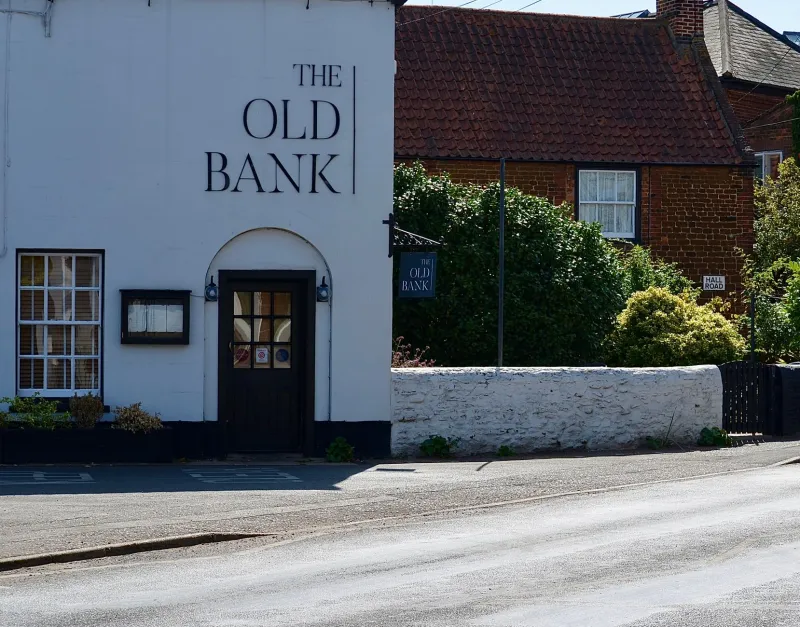
Walk towards the square, keeping to the same side of the road. The first stop is the old bank, or the building that most people still call the bank even though it has been something else for years. Look at the stone base and the deep sill. Banks built to look solid, and they usually left their name somewhere. Sometimes it is carved; sometimes it is a shadow under the paint where the letters were removed. If you can make out a date, note it. Dates are anchors.
The ghost sign above the charity shop
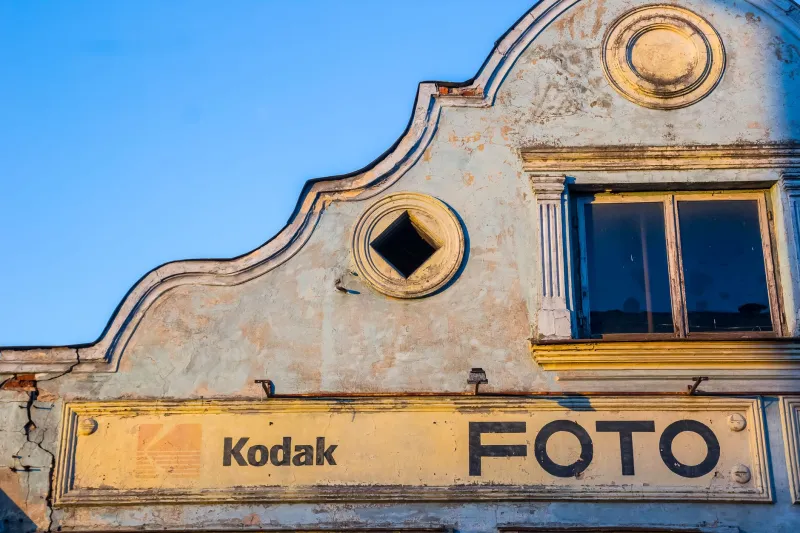
The best ghost signs are the ones that appear only in certain weather. A pale patch of wall, a faint gold line, a word that is almost there. On the building now used as a charity shop, look above the modern fascia. The old sign was probably painted directly onto the render and has been slowly eaten by sun and rain. It may have advertised a grocer, a draper or a cycle agent. The lettering often looks Victorian, but many of these signs were repainted well into the twentieth century; a ghost sign can be younger than it appears.
The giveaway is usually the shape of the letters, not the words. Long, thin letters with shadow lines were popular for shopfronts because they could be read from a distance. If you see a curved line at the end, it may be part of an old brand or a painted border. Take a photograph from the opposite pavement, straight on, and compare it with old postcards in the library or the village archive. That is how the pieces get joined up.
Thresholds, tiles and cellar hatches
Keep walking. Look down. A worn threshold tells you where people queued, and a deep step tells you the floor inside was once much lower than the street. Some doorways have a small boot scraper set into the stone, a reminder that the road was mud for most of the year. Others have a narrow slot for a letter flap that has long since been sealed.
Outside the former butcher’s, look for a band of coloured tiles at the base of the wall. Butchers, grocers and dairies often used glazed tiles because they were easy to wash. If the tiles are green, blue or brown, they may be original. If they are white and shiny, they may be a later refit. Either way, they mark the shopfront as a place where food was handled, not just sold. On the pavement nearby, a cast-iron cellar hatch or a metal plate can show where barrels, coal or produce were lowered into a basement. Do not lift them; just notice them.
The smiddy and the side lane
Turn down the narrow lane beside the old smiddy. This is the quietest part of the walk and the easiest place to imagine the noise. A blacksmith’s shop was not a pretty building. It was dark, hot and practical, with a wide doorway for horses and a hard floor for sparks. The granite here is rougher, less dressed than the frontages on the main street. Look for a change in the stone course and a patch of brick where a forge chimney may once have been.
At the end of the lane, turn back towards the church. The churchyard wall is a useful lesson in local geology: large granite blocks, smaller infill stones and occasional brick repairs. Granite is stubborn. It does not weather into soft curves like sandstone, so the edges stay sharp and the joints stay visible. That is why the village’s older buildings feel a little unyielding, even when the shopfronts are painted in bright modern colours.
The old school and the market cross
Pause at the old school building. Look at the height of the windows and the size of the doors. School buildings often have high windows to stop children looking out, and separate entrances that once led to separate departments. The stone around the door may carry a date or a name. If the building has been converted into a house, the conversion will have left its own clues: new chimneys, a raised pavement, a letterbox where a gate once was.
Finish near the market cross or the square. This is the place to stand still. Markets leave very little physical trace once the stalls are gone, but they leave a pattern in the buildings. Pubs, banks and shops cluster where people already gathered. The wide pavement might be a later addition; the narrow lane might once have been the main route. Ask yourself what the square would have sounded like on a Saturday a hundred years ago. Then ask who is missing from the picture.
Send us your memories
This walk is deliberately unfinished. Alford Voice would like to add the names, dates and photographs that only local people can supply. Do you remember the grocer’s, the saddler’s or the shop that sold everything from paraffin to penny sweets? Have you got an old photograph of the high street before the bypass, before the supermarket, before the window frames were changed? Did your family work in one of these buildings?
Send us a scan or a smartphone photograph, tell us roughly where it was taken and what you remember, and we will add it to the growing archive. We are especially keen to hear about ghost signs that have since been painted over, doorways that have been blocked up and shopkeepers whose names have slipped out of common memory. The stones remember a lot, but they cannot remember everything. That part is up to us.